

When engineers evaluate micro DC motors, performance specifications are only part of the story. How long will the motor last? What happens in high heat or dusty environments? At TT MOTOR, we receive these questions every day. Here are the five most common ones, with clear answers drawn from our factory testing and real-world experience.
1. What is the typical lifetime of a brushed DC motor?
The lifetime of a brushed DC motor is primarily limited by brush and commutator wear. Under normal rated load and clean conditions, a motor with carbon brushes typically lasts 500 to 1,500 hours. Motors with precious metal brushes can reach 2,000 to 3,000 hours, especially in intermittent duty. For applications requiring longer life – such as medical devices or industrial actuators – TT MOTOR recommends switching to brushless DC (BLDC) motors, which easily exceed 10,000 hours because there are no brushes to wear out.
2. How does temperature affect motor life?
Heat is the enemy of all motors. Every 10°C rise above the rated operating temperature can cut brush life in half and degrade permanent magnets. The insulation class of our motors (Class E or B, 120–130°C) defines the maximum allowable winding temperature. However, the motor case should not exceed 85°C for brushed types or 100°C for BLDC types during continuous operation. For high‑temperature environments (e.g., automotive engine compartments), TT MOTOR offers high‑temperature magnets, special grease, and Class H insulation (180°C).
3. Can the motor handle dust, moisture, or vibration?
Standard micro DC motors are built for indoor, clean environments. For harsh conditions, we provide IP ratings. An IP54 motor resists dust ingress and splashing water – suitable for outdoor security cameras or garden valves. Additionally, we offer reinforced bearings and shaft seals to handle vibration. Always tell your TT MOTOR sales engineer about your operating environment so we can recommend the right protection level.
4. How do I know when the motor is reaching end of life?
A brushed motor rarely fails suddenly. Warning signs include:
Gradual drop in no‑load speed (more than 15% from original)
Increased no‑load current (more than 30%)
Audible sparking or rough noise
Intermittent starting
For BLDC motors, the main failure mode is bearing wear, which shows up as increased vibration or whining noise. We recommend periodic performance checks for critical applications. TT MOTOR can provide test protocols for your maintenance team.
5. What does TT MOTOR do to ensure reliability?
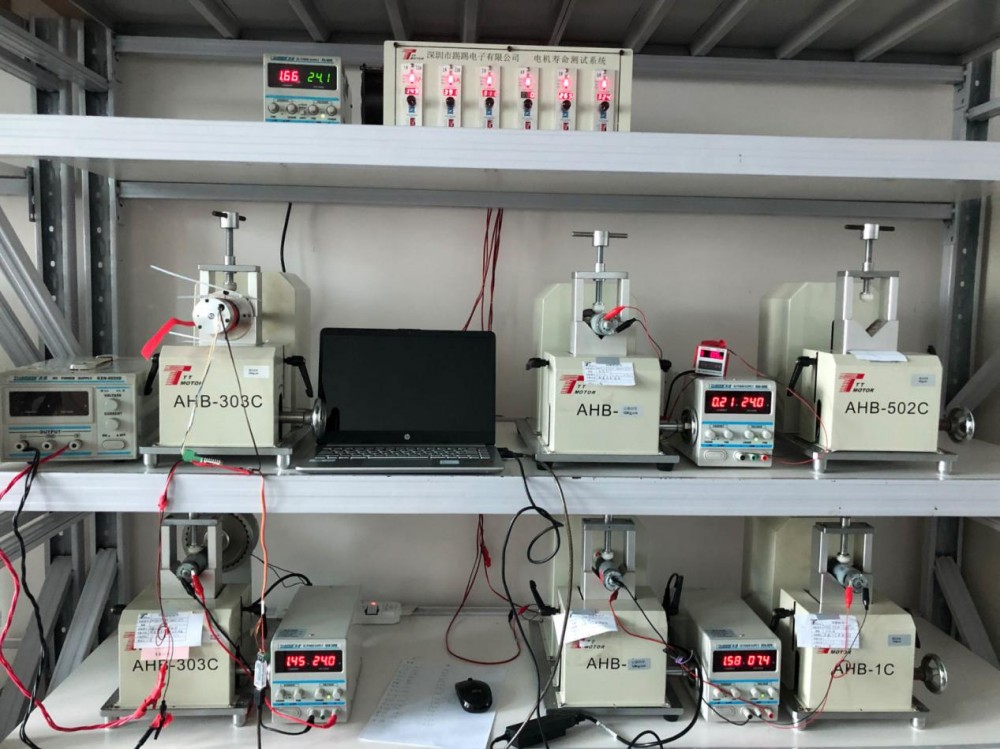
Every motor we ship undergoes 100% final testing: no‑load speed, current, rated load speed, current, noise, and vibration. Sample motors from each batch run life tests (1,000 hours continuous at rated load) and environmental stress tests (humidity, thermal shock, salt spray). Our ISO 9001 certified processes track each motor with a code, linking back to winding, balancing, and assembly data. When you buy from TT MOTOR, you receive a proven product, not a gamble.
Final Advice
The best way to verify motor life is to test it under your actual load and duty cycle. TT MOTOR provides sample motors and can run custom life tests simulating your application. Contact us to discuss your reliability requirements – we are here to help you succeed.
Post time: Jun-25-2026